


-

- Magazin
-
Beiträge
Confectionery retail: Which levers are crucial to success?

Price psychology in confectionery retail
Price plays a crucial role in confectionery purchases, both in range planning and purchases at the POS.
Impulse purchases vs price sensitivity
Sweets are often impulse buys. This indicates that price sensitivity has little influence on these purchases, as a consumer survey conducted by the Association of the German Confectionery Industry (BDSI) in 2025 confirms: 81 per cent of respondents said that taste is the most important purchase criteria for them, and 57 per cent said that it comes before price. Another interesting finding is that around 80 per cent of respondents buy sweets as presents for occasions such as birthdays, parties and holidays. This means that higher prices are most likely to be accepted for limited editions, seasonal collections and other products that are often purchased as gifts.
Psychological price barriers in retail
Some confectionery prices have become ingrained in consumers’ minds over time and serve as guides when making a purchase. If prices exceed these barriers, the perceived price-performance ratio changes significantly. One example of this is the adjustments made to the price and net weight of Milka’s Alpine Milk chocolate bar in early 2025. The reactions were clear and show how sensitive consumers can be to price changes. The key takeaway is this: Price adjustments must have a psychologically sound basis and should not go against consumers’ mental pricing logic. Graduated pack sizes, product bundling or promotional prices are more likely to be accepted.
Achieving stable mark-ups without price rises
Fixed mark-ups can be achieved in confectionery retail without increasing product prices, for example, by adjusting pack sizes and designs.
Pack sizes and portion-sized formats
Snackification is currently a huge confectionery trend. It is changing consumption habits and also affecting the volume and size of products as a result. Retailers can use product formats strategically:
- Single-serve portions and on-the-go formats, such as nutella & Go, are aimed at mobile urban consumers and increase rotation, especially in an impulse-buy display or a secondary placement at the POS.
- Larger packages with individually wrapped mini formats or resealable openings, such as Knoppers Goodies, are ideal for sharing for consumers – and they generate higher turnover per sale.
Packaging design impacts sales and logistics
Package design influences purchase decisions at the POS. At the same time, packaging must be compatible with logistics processes such as palletisation. And it is essential to consider economic feasibility alongside design requirements. Standardised packaging, like that used by Ritter Sport, for instance, is easier to stack, transport and put on display than more complex designs, streamlining logistics, storage and shelf replenishment.
Promotions as a key success factor
Without the right promotions, sales may stagnate. That’s why promotional activities in confectionery retail need to be carefully planned and executed.
The importance of promotions
Retailers use promotions to drive focused awareness and reach without undermining a product’s price point. Moreover, special offers help keep inventory turnover high and stimulate sell-off. Strategically managing promotional campaigns – by taking into account timing, format and how they fit within an overall assortment – is more important than running them frequently. German supermarket chain Edeka’s recent campaign to kick off the new year illustrates this: In it, TV host and actress Palina Rojinski appears as “Sparlina” (a playful name combining the German verb “sparen”, meaning “to save”, with her own name), advertising the offers of the week and promotions tied to Payback (a popular German loyalty programme) throughout January.
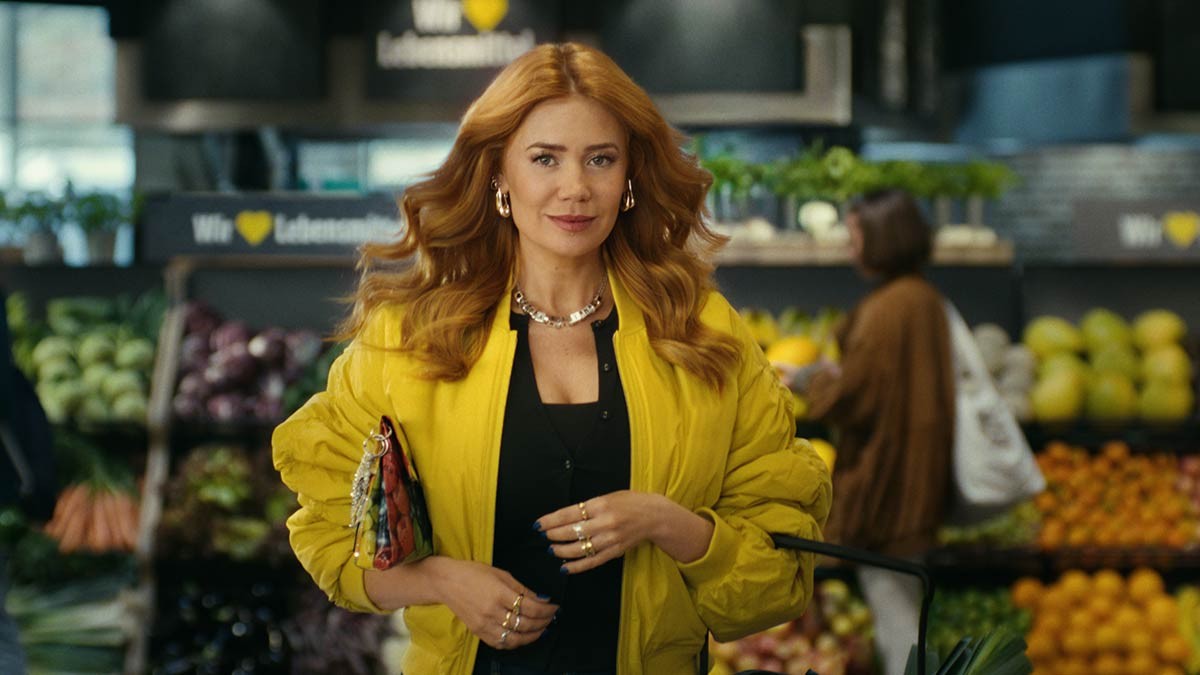
“Sparlina” – Palina Rojinski is turning January into a month of savings in retail (confectionery items included). (Image: © Edeka | Press photo)
Why promotion forecasting matters
Retailers must carefully assess sales promotions, paying close attention to quantities, supplier delivery capability and the resulting financial impact. If promotional formats can be reliably predicted and repeated, this helps to substantially lower financial risk. If they can’t, unclear processes and last-minute changes make planning difficult. For that reason, concepts for repeatable promotions such as Kaufland’s “SamStars” are more valuable to retailers than one-off promotions designed to maximise short-term profits.
Balancing product innovation with market relevance
Adding new products to a range can be challenging, but doing so can drive sales if certain criteria are met.
Why some product launches don’t add value
Many new confectionery products create only short-lived buzz and do not translate into sustained sell-through. Evaluate them early on to mitigate financial risk: Does the product make a quantifiable contribution to its category? Can it be used in promotions? In addition, whether new products actually boost inventory turnover or merely expand a selection depends on clear launch strategies, predictable promotional mechanics and manufacturer support.
Criteria for commercially viable product additions
Clear, measurable criteria should be used to determine which products are worth including in a specific line. These include:
- Proven contribution to the relevant category
- Consistent inventory turnover
- Sustainable margin structures
- Compatibility with existing processes and logistics operations
In other words, products must be suitable for promotional campaigns and marketable without permanently eroding profit margins. If items are to become part of a core offering, they must be commercially viable. On top of that, transparency, reliability and cooperativeness on the manufacturer's part help reduce procurement risks and costs.
The takeaway: what drives confectionery sales
Many small business levers play a crucial role in the snacks and confectionery retail segment. Pricing logic, packaging formats, promotional mechanics and disciplined product selection are some of the key determinants of success. The key takeaway for retailers is that successfully managing this segment requires a firm grasp of its day-to-day economic realities.