


-

- Magazin
-
Beiträge
Calowry: Chocolate of the future?
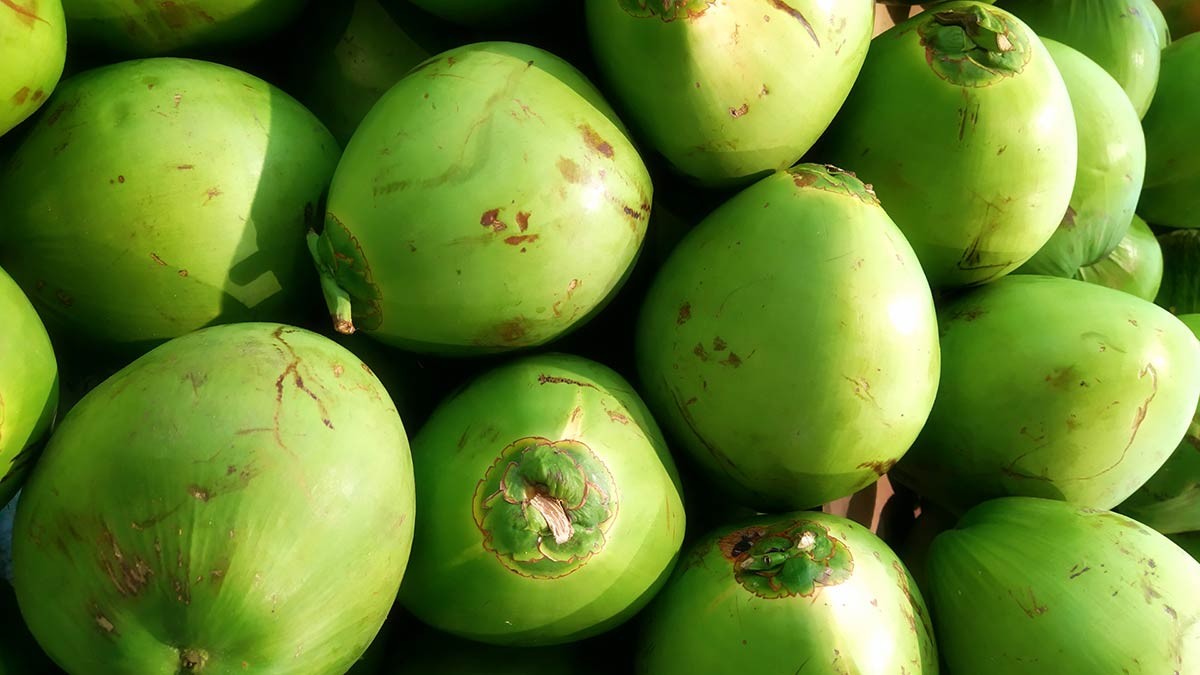
Calowry's chocolate innovation with coconuts
In 2024, Calowry Inc., a food technology company from Canada, registered a patent for an innovative chocolate production process. The new approach: Chocolate made from water and coconut fibre. This method offers several advantages: Not only are waste and by-products used, furthermore the plant-based chocolate is also certified in accordance with the kosher, pareve and halal regulations, making it suitable for many people.
Old manufacturing process, reinterpreted
Calowry enables the production of solid chocolate using just three ingredients: Chocolate, fibre and water. How does this process work and how does it fundamentally differ from conventional chocolate production?
Hal P. Chouinard:
"No major changes have to be made to the conventional manufacturing process. The process is based on the principle of replacing part of the original real chocolate with very specific, hydrated, pure coconut fibres. Unlike certain novel 'chocolate' mixtures, where not a single molecule was ever part of a cocoa tree, you are still eating real chocolate - no matter which type you prefer. For example, around half of a filled chocolate is made from original chocolate, the rest from hydrated fibres. One could expect this to have an adverse effect on the taste and texture, but in fact the opposite is true. You can convince yourself of this at ISM 2026: We will make thousands of such filled chocolates available - for extensive sampling."
The raw material coconut under focus
The raw materials used by Calowry originate from the mesocarp of young, green coconuts. Why is precisely this part of the coconut decisive for achieving the desired texture and stability of chocolate?
Hal P. Chouinard:
"Our patented process is the only one that enables the production of firm, crispy chocolate using fibre and water which also convinces in terms of its taste. The key lies in the whitish mesocarp of coconuts that are between four and six months old. In this stage the layer is not yet brown and fibrous, but instead firm, comparable with an unripe honey melon or aubergine. It possesses characteristics that are almost unique in the plant world.
With the aid of our extensive, completely natural proprietary process, we exclusively treat the material with a type of "weak lemonade' to gain microscopically fine, pure fibre with a high water-binding capacity. Once this is hydrated and mixed with real chocolate, the result is virtually indistinguishable from the original. The mass should actually form lumps and coagulate - but our special process prevents precisely this from happening. You have to try it to believe it."
Manifold application possibilities
Calowry can be used to make dark, dairy, white and pink-coloured chocolate, while significantly reducing the calorie and carbohydrate content. Which product categories or uses do you find particularly promising for this ingredient?
Hal P. Chouinard:
"Our development team has carried out over 6,000 documented tests which demonstrate that there is no single chocolate product category on the market that couldn't be produced with reduced calories, fewer carbohydrates and lower ingredients costs. Bars, spreads, ganaches, coatings - everything is possible. If it is made of real chocolate, we can make it using Calowry. Many chocolate products have extremely high calorie counts - among the highest of all foodstuffs. Up until now there was no tasty and healthy option for significantly reducing this considerable contribution to the global obesity and diabetes crisis. Up until now. No chemicals from a test tube, but exclusively natural, organically pure fibre and water – with a hint of lemon juice."
Calowry at ISM 2026
You are presenting Calowry at a large exhibition stand at ISM Ingredients and will also be appearing on stage. What do you want to convey or demonstrate to the visitors there?
Hal P. Chouinard:
"Producing solid chocolate with water was previously considered to be as impossible as teleportation. Most guests of ISM Ingredients are familiar with chocolate production. We don't expect them to simply take our word for it that the sampled filled chocolates were made using water. Which is why we will produce the chocolate right in front of the audience - in two stage presentations. No video tricks, no AI magic. Our leading food technologist will mix fibre, chocolate and water live and produce precisely each filled chocolate that can subsequently be sampled at the stand. The entire process can be witnessed in real-time."
Future plans and scaling for Calowry
Calowry already has received regulatory approval in the USA and Canada and the process is patented. What steps are planned next?
Hal P. Chouinard:
"We are currently building a production centre on the premises of a wholly-owned Southeast Asian subsidiary of one of Europe's biggest food companies and will be revealing further details about the joint venture soon. We will initially process 650,000 coconut shells daily – scaling up to 1.2 million in the following year. The global demand requires over 100 million shells a year. However, these amounts hardly influence the around 50 billion unused coconut shells worldwide, which are currently rotting and causing an ecological crisis. Each single fibre we produce originates from components that have previously simply been thrown away."
Conclusion: Calowry is revolutionising chocolate
For us Calowry stands for a new type of chocolate production and a radically different understanding of food innovation: Resource-efficient, technologically scalable and compatible with existing production chains. What began as a niche product, could evolve into the new standard, especially wherever enjoyment, health and sustainability are no longer seen to rule each other out.